Key Takeaways
- The IT talent shortage costs more than unfilled roles—it drives project delays, burnout, slower support, security gaps, and inconsistent coverage across locations.
- Hiring your way out is often impractical due to rising salaries, long recruiting cycles, and variable, location-specific demand.
- IT field services act as a force multiplier: local technicians handle hands-on work so internal teams can focus on strategic initiatives.
- The most resilient organizations are adopting a hybrid IT support model—internal expertise plus remote, automated, and on-demand field support.
Most discussions about the IT talent shortage focus on one challenge: finding qualified people. And while recruiting technical talent has become increasingly difficult, the real problem goes much deeper. The hidden costs of the IT talent shortage are showing up in delayed projects, increased security risks, employee frustration, slower business growth, and burned-out IT teams. Companies aren’t just struggling to fill open positions, they’re struggling to keep up with the growing demands being placed on technology departments.
Today’s IT teams are expected to support hybrid workforces, secure increasingly complex environments, manage cloud infrastructure, prepare for AI adoption, maintain compliance, and deliver exceptional employee experiences, all while operating with limited resources. The result is an operational bottleneck that affects the entire business.
Forward-thinking organizations are recognizing that they don’t necessarily need to hire their way out of the problem. Instead, many are turning to flexible field services support to extend the reach of their internal teams, reduce operational strain, and improve service delivery. The question isn’t whether the IT talent shortage is affecting your organization. It’s how much it’s costing you.
Why the IT Talent Shortage Continues to Grow
Technology has become central to nearly every business function. At the same time, the complexity of managing modern IT environments has increased dramatically. Organizations now require expertise in:
- Cybersecurity
- Cloud infrastructure
- Microsoft 365
- AI readiness and governance
- Networking
- Compliance
- Identity management
- Endpoint management
- Disaster recovery
- Collaboration platforms
The demand for these skills continues to outpace supply. Meanwhile, experienced professionals are becoming more selective about where they work, while organizations compete for the same limited talent pool. The result is a perfect storm:
- Longer hiring cycles
- Increased salary expectations
- Greater employee turnover
- Growing workloads for existing staff
For many companies, open positions remain unfilled for months. Unfortunately, the business impact begins long before a position is officially vacant.
Hidden Cost #1: Delayed Projects and Strategic Initiatives
One of the first casualties of the talent shortage is innovation. When IT teams become understaffed, they naturally focus on keeping the lights on. Routine support requests, troubleshooting, and operational tasks consume most of the team’s time and energy. As a result, strategic initiatives often get delayed, including:
- Cloud migrations
- Infrastructure modernization
- Security improvements
- AI readiness initiatives
- Digital transformation projects
- Office expansions
- Technology refreshes
The business may not immediately recognize the cost of these delays, but over time they create competitive disadvantages. Every postponed project represents lost opportunities for efficiency, growth, and innovation. Many discover that their highly skilled engineers are spending their days deploying laptops, troubleshooting conference room equipment, and traveling between offices instead of working on strategic business priorities.
Hidden Cost #2: IT Burnout and Employee Turnover
The talent shortage creates a vicious cycle. As staffing levels become strained, remaining team members absorb additional responsibilities. Workloads increase. Stress rises. Job satisfaction declines. Eventually, businesses lose the very employees they were trying to retain. Burnout has become one of the most significant challenges facing IT departments today. Technical professionals are often expected to:
- Manage critical infrastructure
- Respond to security incidents
- Support end users
- Complete projects
- Remain available after hours
When teams are consistently stretched thin, even small disruptions can create significant operational challenges. Replacing experienced IT personnel is expensive, time-consuming, and disruptive. The hidden cost isn’t simply recruiting a replacement. It’s the loss of institutional knowledge, productivity, and momentum.
Hidden Cost #3: Slower Response Times and Employee Frustration
Employees judge IT based on responsiveness. When issues linger unresolved, productivity suffers. In understaffed environments, common challenges include:
- Longer support queues
- Delayed equipment deployments
- Slower issue resolution
- Reduced on-site support availability
- Extended project timelines
These delays create ripple effects throughout the organization. A delayed laptop deployment may postpone a new hire’s productivity. A conference room issue may disrupt important client meetings. A networking problem may impact an entire office. While these incidents may appear small individually, their cumulative impact on employee experience can be substantial.
Hidden Cost #4: Increased Security and Compliance Risks
Cybersecurity workloads continue to grow. Threat actors are becoming more sophisticated. Regulatory requirements are becoming more demanding. Meanwhile, IT teams are being asked to do more with fewer resources. When staffing shortages occur, organizations often find themselves making difficult choices. Security projects get postponed. Patches are delayed. Audits take longer. Documentation becomes outdated. Monitoring gaps emerge. These challenges increase organizational risk.
Many cybersecurity incidents can be traced back to resource constraints rather than technology failures. An understaffed IT team may know exactly what needs to be done but simply lack the time and personnel to execute effectively. A managed cybersecurity partner can help close monitoring and patching gaps before they become incidents.
Hidden Cost #5: Geographic Coverage Challenges
The modern workplace is increasingly distributed. Organizations now support:
- Branch offices
- Retail locations
- Manufacturing facilities
- Healthcare clinics
- Regional offices
- Hybrid workers
Supporting multiple locations creates a significant challenge for lean IT teams. Consider the common scenarios:
- A laptop deployment is needed in Atlanta.
- A network device fails in Phoenix.
- An executive needs hands-on support in Chicago.
- A new office opens in Denver.
Each request requires local expertise. Without local resources, organizations often rely on:
- Expensive travel
- Delayed response times
- Temporary contractors
- Overextended internal staff
The result is inconsistent service and increased operational costs.
Why Hiring More People Isn’t Always the Best Solution
When organizations face staffing challenges, the obvious response is often to hire additional employees. However, hiring isn’t always the most practical solution. Challenges include:
Rising Compensation Costs
Technical salaries continue to increase across many specialties.
Long Recruiting Cycles
Open positions can take months to fill.
Variable Demand
Workloads often fluctuate based on projects, office openings, hardware refreshes, and growth initiatives.
Geographic Constraints
Hiring local technical staff for every location is rarely economical.
Many organizations find themselves paying full-time salaries for workloads that only require occasional support.
The Field Services Advantage
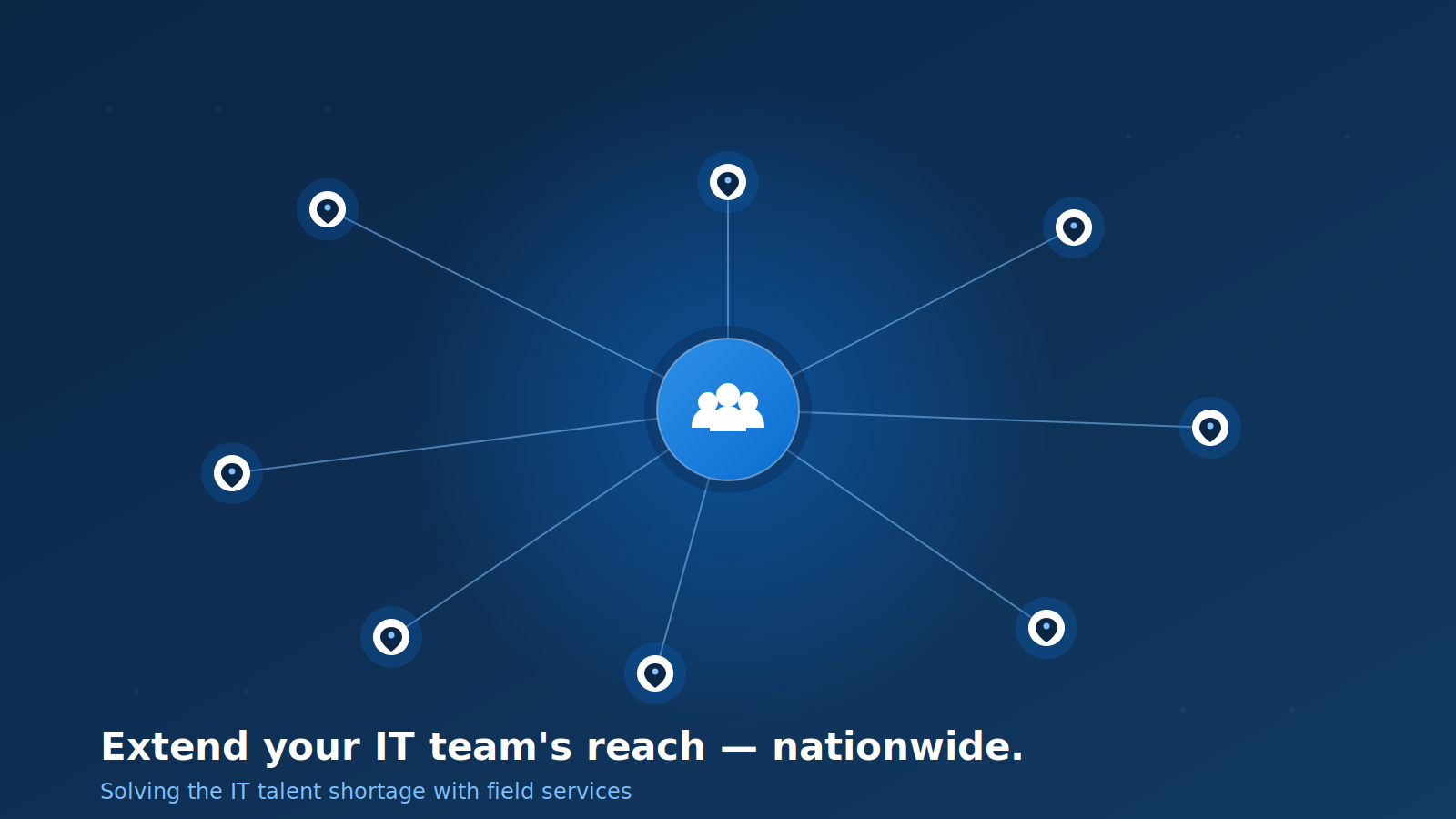
This is where field services support can play a critical role. Rather than attempting to hire and manage local technical resources everywhere they operate, organizations can leverage a trusted field services partner to provide on-demand support when and where it’s needed. Think of field services as a force multiplier for your IT team. Your internal staff remains focused on strategic initiatives while local technicians handle hands-on execution. This approach creates flexibility without increasing permanent headcount.
How Field Services Help Solve the Talent Gap
1. Extend the Reach of Your Existing Team
Field technicians can provide local support in locations where your IT team lacks a physical presence. This eliminates the need for costly travel and improves response times.
2. Free Senior Engineers for Strategic Work
Highly skilled IT professionals should be focused on initiatives that drive business value. Field services can handle tasks such as:
- Hardware deployments
- Device replacements
- Office setups
- Asset management
- Site surveys
This allows internal teams to concentrate on security, cloud, AI, and transformation initiatives.
3. Scale Support as Business Needs Change
Field services provide flexibility. Organizations can scale support up or down based on:
- Growth initiatives
- Mergers and acquisitions
- Office openings
- Technology refreshes
- Seasonal demand
This creates a more efficient staffing model.
4. Improve Employee Experience
Faster on-site support leads to:
- Reduced downtime
- Quicker issue resolution
- Better onboarding experiences
- Increased employee satisfaction
Employees care less about who resolves their issue and more about how quickly it gets resolved.
5. Reduce Hiring Pressure
Field services don’t replace internal IT teams. They complement them. Companies can avoid hiring for highly localized support needs while maintaining consistent service delivery across locations.
The Future of IT Staffing Is Hybrid
The traditional model of building larger internal IT teams for every support requirement is becoming increasingly difficult to sustain. Technology environments are more complex. Workforces are more distributed. Business expectations are higher.
As a result, many organizations are embracing a hybrid support model that combines:
- Internal IT expertise
- Remote support capabilities
- Automation and AI
- On-demand field services
This approach provides the flexibility needed to navigate ongoing talent shortages while maintaining service quality and operational efficiency.
Turn the Talent Shortage into a Competitive Advantage
The companies that thrive despite the IT talent shortage won’t necessarily be the ones that hire the most people. They’ll be the ones that use their talent most effectively. By leveraging field services as an extension of internal IT operations, organizations can reduce strain on their teams, improve employee experiences, accelerate strategic initiatives, and deliver consistent support across every location.
The IT talent shortage isn’t likely to disappear anytime soon. But with the right support model, it doesn’t have to slow your business down.
Dataprise Field Services provide experienced local technicians who act as an extension of your IT organization. Whether you need support for office openings, hardware deployments, executive support, asset management, technology refreshes, or nationwide projects, Dataprise helps you scale IT operations without increasing permanent headcount. Our nationwide field services capabilities allow your internal teams to focus on innovation while we deliver the hands-on support needed to keep your business moving forward.
Frequently Asked Questions
What is causing the IT talent shortage?
Technology now touches nearly every business function, and the complexity of managing modern environments—cybersecurity, cloud, AI readiness, compliance, and more—has grown faster than the supply of skilled professionals. That mismatch produces longer hiring cycles, higher salary expectations, greater turnover, and heavier workloads for existing staff.
What are the hidden costs of the IT talent shortage?
Beyond unfilled roles, the shortage causes delayed projects and strategic initiatives, IT burnout and turnover, slower response times and employee frustration, increased security and compliance risk, and coverage gaps across distributed locations.
How do IT field services help with the talent shortage?
Field services act as a force multiplier. Local technicians handle hands-on work—hardware deployments, device replacements, office setups, asset management, and site surveys—so senior engineers can focus on security, cloud, AI, and transformation. This extends your team’s reach and improves response times without adding permanent headcount.
Should we hire more IT staff or use field services?
Hiring isn’t always practical given rising salaries, months-long recruiting cycles, and demand that varies by project and location. Many organizations pay full-time salaries for workloads that only need occasional support. Field services complement internal teams by covering localized, variable needs cost-effectively.
What is a hybrid IT support model?
A hybrid model combines internal IT expertise, remote support capabilities, automation and AI, and on-demand field services. It gives organizations the flexibility to navigate ongoing talent shortages while maintaining service quality and operational efficiency.